

Guía de estilo para el uso de palabras de origen chino

Authors

Sara Rovira-Esteva, Universitat Autònoma de Barcelona; Helena Casas-Tost, Universitat Autònoma de Barcelona; Sílvia Fustegueres i Rosich; Antonio Paoliello-Palermo, Universitat Autònoma de Barcelona; Xianghong Qu, Universitat Autònoma de Barcelona; Mireia Vargas-Urpí, Universitat Autònoma de Barcelona

Synopsis

This work aims to provide professionals, institutions and the general public with a style guide that sets out clear, agreed criteria on how to handle Chinese terms and references in a text written in Spanish, with a view to standardising their use. It is divided into twelve separate chapters, allowing readers to consult specific sections without having to read the entire work. The first five chapters cover general topics, whilst the remaining chapters are organised by theme. This is an essential reference work for anyone who either uses Chinese as their working language or comes into contact with it from time to time, such as students, translators, proofreaders and librarians, amongst others.

Link to Transcripción de las sílabas del chino con el Alfabeto Fonético Internacional (AFI)
Link to Glosario

Downloads

Download data is not yet available.

Author Biographies

Sara Rovira-Esteva, Universitat Autònoma de Barcelona

She is a professor at the Universitat Autònoma de Barcelona, where she teaches Chinese language and linguistics, as well as translation. She is the principal investigator of the Research Group on Translation from Chinese into Catalan and Spanish (TXICC) and of the Study Group on Literacy in Second Language Teaching, Learning and Translation (GELEA2LT). With nearly 30 years’ teaching experience, she is the author of five books, more than 30 book chapters and nearly 50 academic articles published in renowned international journals, most of which are available as open access in the UAB’s institutional repository.

Helena Casas-Tost, Universitat Autònoma de Barcelona

She is an Associate Professor at the Autonomous University of Barcelona, where she teaches Chinese at undergraduate level and Chinese pedagogy on the Master's in Chinese Language Teaching for Spanish Speakers, which she has directed since 2018. Her main research areas are Chinese applied linguistics and the teaching of Chinese as an additional language. She is a member of the TXICC and GELEA2LT research groups, and her academic output can be consulted in the UAB's digital document repository.

Sílvia Fustegueres i Rosich

She is a translator from English, Italian, French and Chinese into Catalan and Spanish, and is also a sworn translator from English, Chinese and Spanish into Catalan. She works at Ampersand Traduccions, where she carries out tasks related to translation and technological innovation. She is a member of the TXICC group, where she works on projects related to Chinese and Sinophone literature. Through her Instagram profile (@lilladeserta), she promotes works from these literary traditions to reach a wider audience. Also in connection with this, she takes part in the podcast ‘L’any de la rata’, which she organises in collaboration with Mireia Vargas.

Antonio Paoliello-Palermo, Universitat Autònoma de Barcelona

He is a Reader at the Autonomous University of Barcelona, where he teaches Classical Chinese and Chinese literature, as well as the didactics of Chinese and Sinophone studies. He has been a researcher at the University of Milan-Bicocca and a teaching fellow at the University of Edinburgh. He is currently a member of the Research Group on Translation from Chinese into Catalan/Spanish (TXICC) and the Study Group on Literacy in the Teaching and Learning of Second Languages and Translation (GELEA2LT), both at UAB. In addition to his teaching and research, he also works as a Chinese-to-Italian editorial translator.

Xianghong Qu, Universitat Autònoma de Barcelona

She is an Associate Professor at the Autonomous University of Barcelona, where she teaches Chinese language, translation and interpretation, and intercultural communication. She is a member of the Chinese into Catalan/Spanish Translation Research Group (TXICC) at the UAB. In addition to her teaching and research work, she also works as a translator between Chinese and Spanish, as well as a simultaneous interpreter at international conferences.

Mireia Vargas-Urpí, Universitat Autònoma de Barcelona

She is the Serra Húnter Associate Professor at the Autonomous University of Barcelona, where she teaches Chinese and Chinese translation. Her research focuses on issues relating to the translation and interpreting of Chinese, intercultural communication in public services, and the teaching of Chinese in digital environments. She is a member of the TXICC, GELEA2LT and MIRAS research groups. She combines her academic work with literary translation from Chinese into Catalan.

References

ABC; Vigara Tauste, Ana María. 2001. Libro de estilo de ABC. 2.ª ed. Barcelona: Ariel.

Agencia EFE. 2011. Libro del estilo urgente. Barcelona: Galaxia Gutenberg; Círculo de Lectores.

Andreini, Attilio; Scarpari, Maurizio; Bacc ini, Giulia. 2022. Corso di lingua cinese classica e letteraria. Milano: Hoepli.

Camps, Magí (coord.). 2004. La Vanguardia. Libro de redacción. Barcelona: La Vanguardia Ediciones; Editorial Ariel.

El País. 2003. Libro de estilo. 18.ª ed. Madrid: El País, Santillana.

El Periódico de Catalunya. 2002. Libro de estilo. Barcelona: Edicions Primera Plana.

Harper, Douglas. 2001-2026. Online Etymology Dictionary. https://www.etymonline.com/search?q=Tea [consulta: 11-7-2026].

IEC. 2025. Nomenclàtor mundial. Oficina d’Onomàstica – Secció Filològica. https://nomenclator-mundial.iec.cat

Lin, Yen-Hwei. 2007. The Sounds of Chinese. Cambridge: Cambridge University Press.

Office of the President. Republic of China. 2014. Central Government. https://english.president.gov.tw/Default.aspx?tabid=450 [consulta: 11-7-2026].

Real Academia Española, Asociación de Academias de la Lengua Española. 2010. Ortografía de la lengua española. Madrid: Espasa Calpe.

Real Academia Española. 2024. Diccionario de la lengua española. https://dle.rae.es/ [consulta: 11-7-2026].

Real Academia Española. 2019. Diccionario panhispánico de dudas. https://www.rae.es/dpd/ [consulta: 11-7-2026].

Rovira-Esteva, Sara. 2010. Lengua y escritura chinas: Mitos y realidades. Barcelona: Edicions Bellaterra.

Serna, Víctor de la (coord.). 1996. Libro de estilo de El Mundo. Madrid: Unidad Editorial, etc.

Sun, Yizhen (孙义桢). 2002. Nuevo diccionario chino-español. 新汉西词典. Beijing: Shangwu Yinshuguan.

Termcat. Centre de Terminologia. 2014. https://www.termcat.cat [consulta: 11-7-2026].

United Nations Group of Experts in Geographical Names. 2014. UNGEGN World Geographical Names. https://unstats.un.org/unsd/geoinfo/geonames [consulta: 11-7-2026].

Wikitravel. 2014. List of Chinese Provinces and Regions. https://wikitravel.org/en/List_of_Chinese_provinces_and_regions [consulta: 11-7-2026].

Yin, Binyong; Felley, Mary. 1990. Chinese Romanization Pronunciation & Orthography = Hanyu Pinyin he Zhengcifa (汉语拼音和正词法). Beijing: Sinolingua.

Zhonghua Renmin Gongheguo Zhongyang Renmin Zhengfu (中华人民共和国中央人民政府). 2013. Zhonghua Renmin Gongheguo xingzheng quhua (中华人民共和国行政区划). https://www.gov.cn [consulta: 11-7-2026]

Zhonghua Renmin Gongheguo Guojia Zhiliang Jiandu Jianyan Jianyi Zongju (中华人民 共和国中国家质量监督检验检疫总局); Zhonghua Guojia Biaozhunhua Guanli Weiyuanhui (中华国家标准化管理委员会). 2012. Hanyu Pinyin Zhengcifa Jiben Guize (汉语拼音正词法基本规则). Basic rules of the Chinese phonetic alphabet orthography. (GB/T 16159/2012). Beijing: Zhonghua Renmin Gongheguo Guojia Biaozhun.
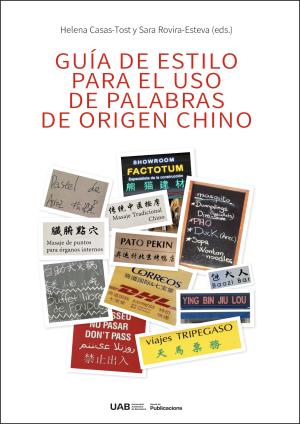
Imatges amb textos en xinès i castellà

Downloads

Published

November 10, 2026

Details about this monograph

ISBN-13 (15)

9791388031618